
Skip to content
-
Subscribe to our newsletter & never miss our best posts. Subscribe Now!
news.jastorm.com news.jastorm.com news.jastorm.com

Independent Media Studio

news.jastorm.com news.jastorm.com news.jastorm.com

Independent Media Studio

  • News
  • Books
  • Video Broadcast
  • Radio Broadcast
  • About
  • Contact
  • Funding
  • News
  • Books
  • Video Broadcast
  • Radio Broadcast
  • About
  • Contact
  • Funding
Close

Search

Subscribe
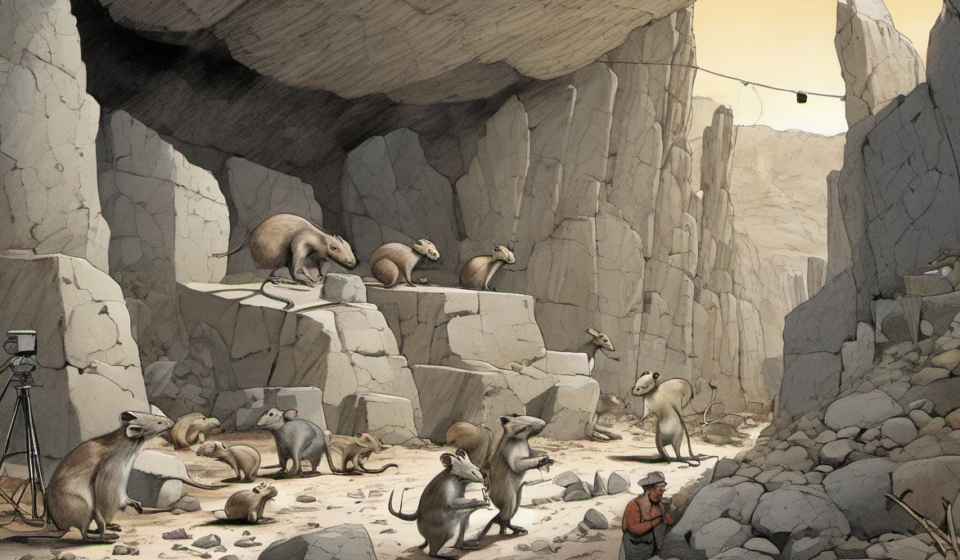
Thailand’s Giant Rat Fossil Reveals Rodent Evolution Secrets — AI-generated editorial illustration
World News

Thailand’s Giant Rat Fossil Reveals Rodent Evolution Secrets

By Kevin Clifford
November 5, 2026 2 Min Read
0

Thailand’s Giant Rat Fossil Reveals Rodent Evolution Secrets

In a surprising discovery, paleontologists have identified a prehistoric rodent species in Thailand that could have weighed as much as a small dog. The fossil, found in a limestone quarry, is the largest rodent ever documented and provides new insights into how early mammals evolved to gigantic proportions.

Unearthing a Massive Mystery

The fossilized remains were uncovered in the Khao Yai region, where ancient limestone deposits preserve a wealth of prehistoric life. Researchers examined the teeth and jaw fragments, noting their size and structure. The specimen’s dimensions suggest a body length of roughly 70 centimeters, making it far larger than any modern rat.

Why the Name Matters

In honor of Princess Sirindhorn, the species was christened Rattus sirindhorn. The naming reflects both the scientific tradition of honoring notable figures and the cultural significance of the discovery to Thailand.

Implications for Rodent Evolution

Rodents are typically small, but this find indicates that early members of the group experimented with size. The giant rat’s dental morphology suggests a diet of tough vegetation, hinting at ecological niches that may have driven its growth. This challenges the prevailing view that rodents remained small due to metabolic constraints.

Future Research Directions

Scientists plan to conduct further excavations in the area to locate more specimens and gather data on the environment that supported such a large rodent. Comparative studies with other large prehistoric mammals may reveal common evolutionary pressures.

Source: CBS News

Watch and listen free on JASTORM – Follow radio and video broadcasts free in the JASTORM app with your free account.


Author

Kevin Clifford

Kevin Clifford is an investigative journalist from Two Dot, Montana, known for his remarkably accurate coverage of international conflicts, humanitarian crises, and unexplained events. Unknown to the public, Kevin is virtually invincible and possesses the ability to generate and manipulate powerful magnetic fields. These abilities allow him to stop weapons, move metal objects, disrupt machinery, and protect others from danger—but they also interfere with cameras and electronic equipment. As a result, every photograph or video taken near him contains strange distortions, static, discoloration, or missing details, making clear evidence of his actions impossible to obtain. To the world, Kevin is simply a determined reporter with unusually defective footage; to his closest friends, he is a hidden guardian who uses journalism to uncover threats and magnetism to stop them.

Follow Me
Other Articles
College Students Uncover Unknown Hip Muscle, Hinting at Better Hip Surgery — AI-generated editorial illustration
Previous

College Students Uncover Unknown Hip Muscle, Hinting at Better Hip Surgery

Ronaldo Ends 23-Year International Career with Portugal — AI-generated editorial illustration
Next

Ronaldo Ends 23-Year International Career with Portugal

Archives

Categories

Copyright 2026 — news.jastorm.com. All rights reserved. Blogsy WordPress Theme