AI can draft your incident handoff: an ATC workflow
When an incident crosses a shift change, the next responder needs a reliable account of what is known and what remains open. An AI draft can organize that account, provided a person checks it before the handoff.
Microsoft’s October 15, 2026 Smart DRI Agent case study describes an internal assistant that brings incident information and operational context together, including team-specific handoff reporting templates. The workflow below is ATC’s suggested application, not a claim that Microsoft’s tool is publicly available or that AI can resolve incidents autonomously.
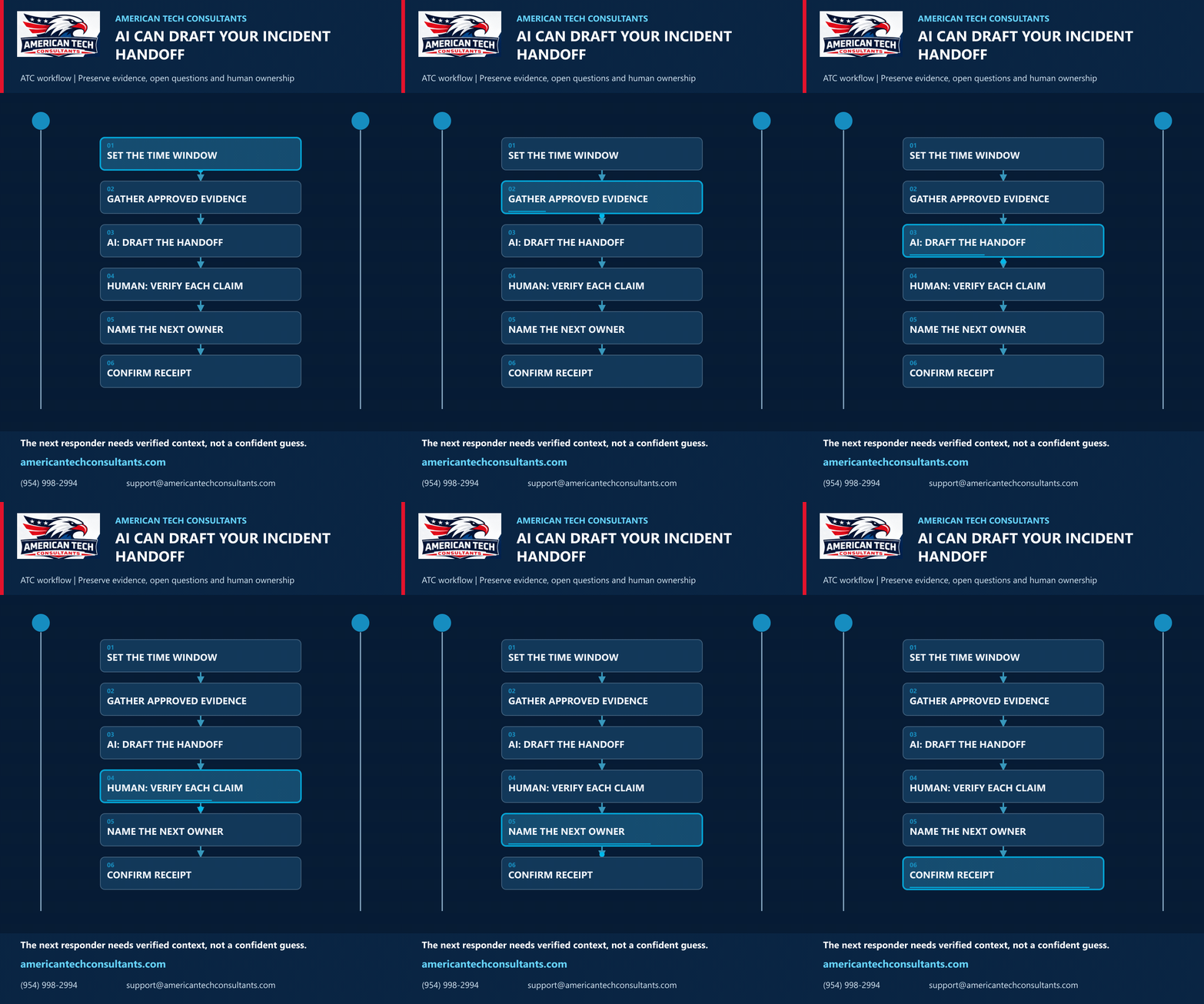
- Set the time window. Identify the incident, reporting cutoff and timezone. Distinguish current observations from older updates.
- Gather approved evidence. Use authorized incident records and relevant telemetry. Preserve links, timestamps and access boundaries.
- Ask AI for a draft. Request observed impact, attempted actions and results, evidence links, unresolved questions and proposed next checks. Require it to separate facts from hypotheses and mark missing information.
- Verify each claim. The outgoing responder checks the draft against the records, corrects omissions and removes unsupported conclusions. A plausible explanation is not a confirmed cause.
- Name the next owner. Assign a person and a clear next check. Keep production changes within the team’s existing approval process.
- Confirm receipt. The incoming responder acknowledges the handoff and flags unclear items. Save the reviewed version in the incident record.
Start with a completed incident to test whether the draft preserves evidence and uncertainty. Evaluate missing facts and correction effort before using it in a live handoff.
American Tech Consultants · americantechconsultants.com · (954) 998-2994 · support@americantechconsultants.com