
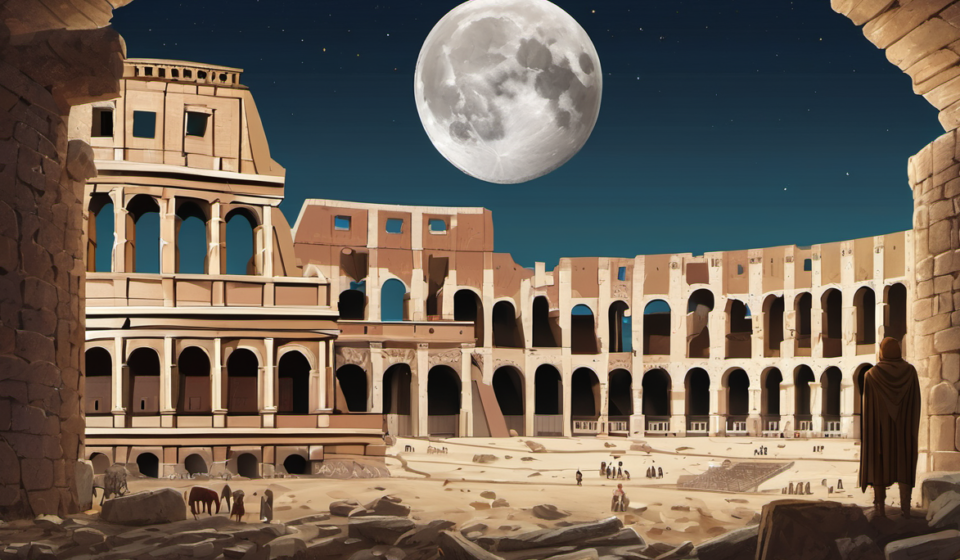
NASA Finds Moon Crater Larger Than the Roman Colosseum
NASA Finds Moon Crater Larger Than the Roman Colosseum
A recent NASA mission has identified a crater on the Moon that is larger than the iconic Roman Colosseum, offering new insights into the planet’s violent history.
What the Discovery Reveals
The crater, located in the Moon’s southern highlands, spans roughly 1.2 kilometers in diameter—more than twice the width of the Colosseum’s 189‑meter footprint. Scientists believe the impact that created it occurred about two years ago, based on crater morphology and ejecta patterns observed by the spacecraft’s high‑resolution cameras.
How NASA Made the Find
Using data from the Lunar Reconnaissance Orbiter’s (LRO) Narrow Angle Camera, researchers mapped the crater’s shape and depth. The LRO’s imaging system, which has been orbiting the Moon since 2009, provides detailed views that allow scientists to estimate the age of surface features by comparing them to known impact events.
Why It Matters
Crater size and distribution help scientists understand the frequency and energy of impacts on the Moon, which in turn informs models of Earth’s own impact history. A crater this large suggests a significant meteorite struck the lunar surface, shedding light on the population of near‑Earth objects that pose potential risks to our planet.
Next Steps for Lunar Research
NASA plans to conduct follow‑up observations with the upcoming Lunar Flashlight mission, which will use a laser to probe the subsurface composition of the crater. These studies aim to determine the materials that were excavated during the impact and to refine age estimates for the event.
Source: CBS News
Watch and listen free on JASTORM – Follow radio and video broadcasts free in the JASTORM app with your free account.