
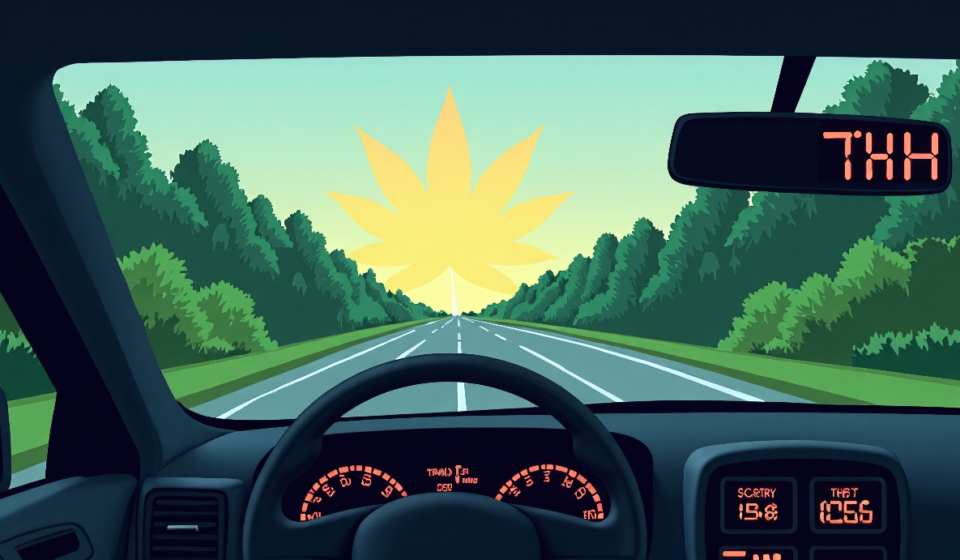
Edible Cannabis May Hide Driving Risks Standard Tests Miss
Edible Cannabis May Hide Driving Risks Standard Tests Miss
Recent findings indicate that people who consume marijuana in edible form can experience driving impairment comparable to smokers, yet their blood THC levels are almost ten times lower. This discrepancy suggests that current roadside drug tests may fail to detect dangerous impairment from edibles, posing a potential threat to road safety.
Edibles vs. Smoking: A Surprising Disparity
In a study highlighted by Fox News, researchers compared the driving performance of individuals who ate cannabis edibles with those who smoked the same amount of THC. While both groups displayed similar levels of impairment on driving tests, the edible users’ THC concentrations were markedly lower. This finding points to a disconnect between measurable THC levels and actual functional impairment.
Implications for Road Safety and Testing Protocols
Standard roadside drug screening methods rely heavily on THC concentration thresholds to determine impairment. If edible users can drive poorly while presenting low THC readings, law enforcement may overlook a significant portion of impaired drivers. The study underscores the need for revised testing protocols that consider the unique pharmacokinetics of edibles.
What This Means for Consumers
Consumers who enjoy cannabis edibles should be aware that the delayed onset and prolonged effects can still impair driving ability. Even if a roadside test returns a low THC level, the individual may still be unsafe behind the wheel. Responsible use and planning—such as avoiding driving for several hours after consumption—remain essential.
Looking Ahead
Researchers and policymakers are urged to explore alternative testing methods that better capture functional impairment, especially for substances with complex absorption profiles like edibles. Until such measures are in place, public education on the risks of driving after edible consumption is critical.
Source: Fox News Health
Watch and listen free on JASTORM – Follow radio and video broadcasts free in the JASTORM app with your free account.