
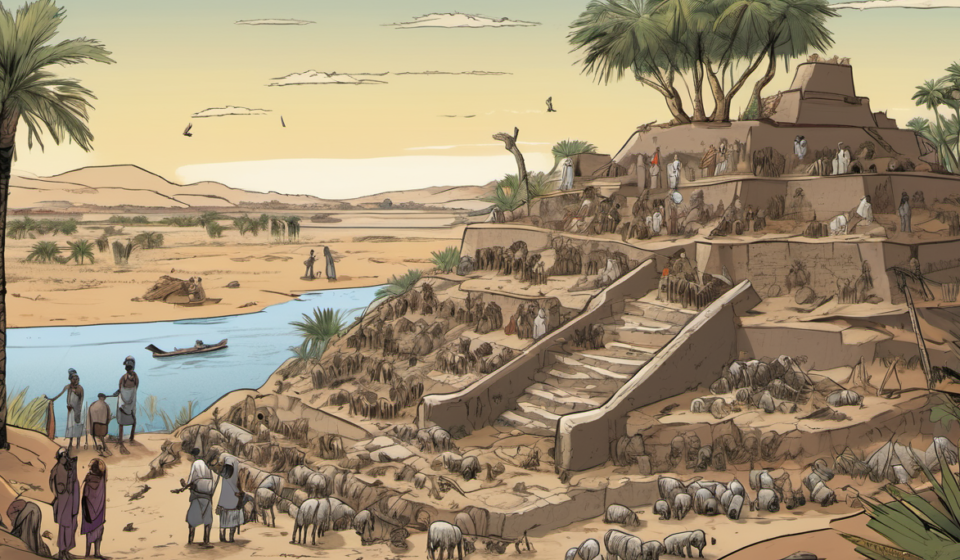
Egypt’s Kom Aziza Site Unveils 600 Years of Funerary Evolution
Egypt’s Kom Aziza Site Unveils 600 Years of Funerary Evolution
Recent excavations at the Kom Aziza burial ground in the Nile Delta have uncovered a layered sequence of human and animal remains that span roughly 600 years. The findings illuminate how Egyptian funerary practices evolved from the late Old Kingdom through the Ptolemaic period, and how the site itself transformed over time.
Layered Evidence of Changing Rituals
Archaeologists identified distinct burial layers, each with unique grave goods and burial arrangements. Early layers feature simple interments with minimal offerings, while later strata contain more elaborate arrangements, including animal sacrifices and richer grave goods. The progression suggests a shift from modest, community-based burials to more elaborate, status‑signifying practices.
Human and Animal Remains Tell a Complex Story
Both human skeletons and animal bones—such as dogs, cats, and cattle—were recovered. The presence of animal remains in certain layers indicates ritualistic practices where animals were sacrificed or buried alongside humans, a tradition that appears to have intensified during the Ptolemaic era.
Evolution of the Kom Aziza Site
Beyond individual burials, the site itself shows architectural changes. Early tombs were simple pits, whereas later periods introduced more structured burial chambers and wall paintings. These modifications reflect broader shifts in religious beliefs and administrative control over burial rites.
Implications for Understanding Ancient Egyptian Culture
The Kom Aziza findings provide a tangible record of how Egyptian funerary customs adapted to political, economic, and religious transformations. By tracing these changes across six centuries, scholars gain a clearer picture of the dynamic nature of ancient Egyptian society.
Source: CBS News
Watch and listen free on JASTORM – Follow radio and video broadcasts free in the JASTORM app with your free account.