
Build a business brief with verified sources
An AI search answer can start a business brief, but the evidence should survive the handoff to your team. Google’s October 15 Search announcement describes clearer routes to source websites. The workflow below is ATC editorial guidance for using those sources, not a claim of automatic verification.
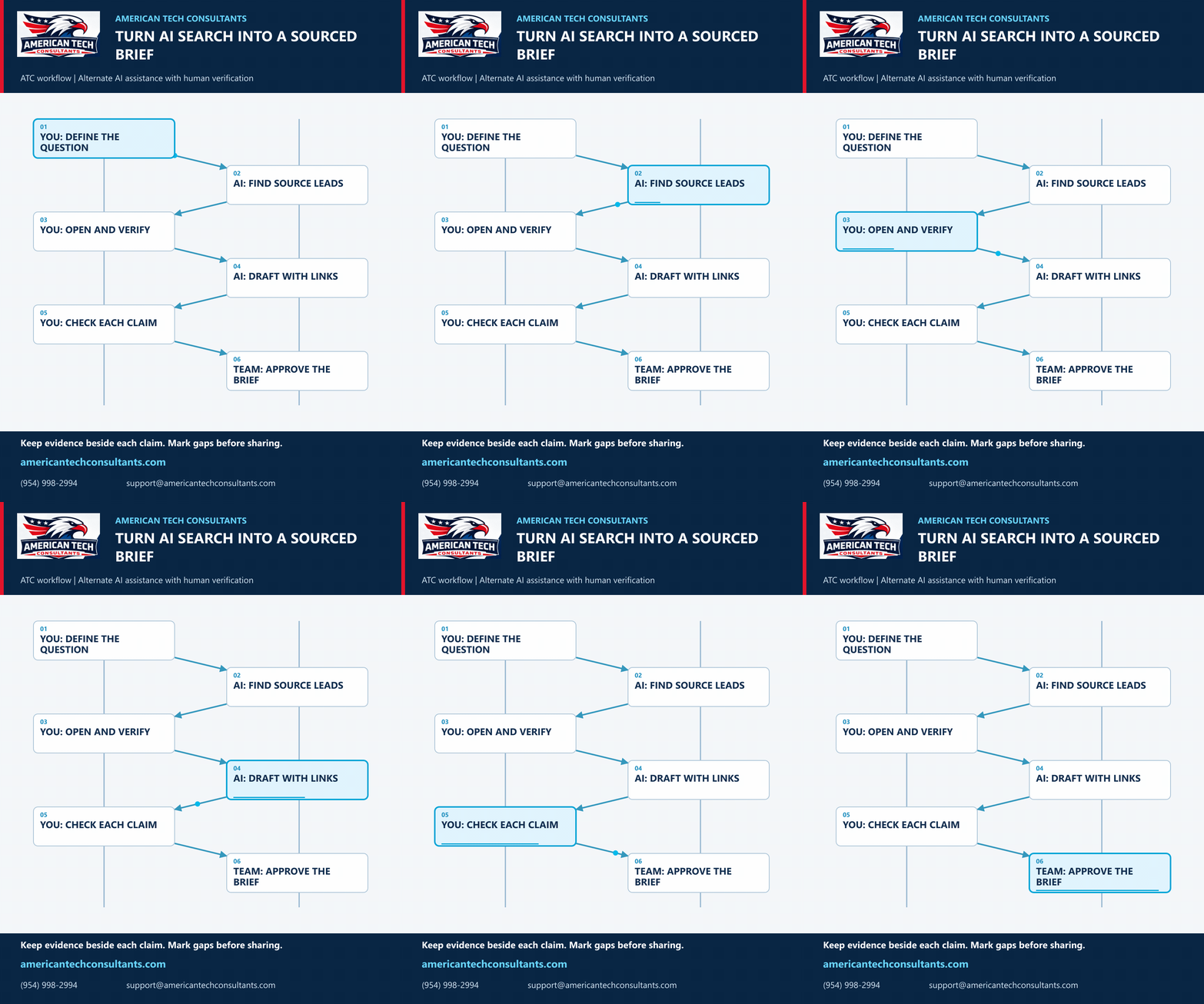
- You define the question. Specify the decision, scope, region and information date. Example: which documented integrations meet our support team’s requirements?
- AI finds leads. Ask for primary-source links and unresolved questions. Treat these as candidates.
- You open and verify. Check the publisher, date and relevant passage. Remove inaccessible or irrelevant sources; do not assume a citation supports the claim.
- AI drafts with links. Provide the verified notes and request a short brief that separates facts, interpretations and unknowns.
- You check each claim. Match every material statement to its source, including qualifications, product editions and dates. Mark conflicting evidence.
- The team approves. Assign a reviewer, retain the source list, and set a review date before sharing the brief.
A useful record has five fields: claim, source URL, source date, supporting passage and reviewer note. Use approved tools and avoid including unnecessary private information. This is an illustrative workflow; no savings or accuracy result is claimed.
Context: Google: More ways to connect with the web from Search, October 15, 2026; checked October 17.
American Tech Consultants | americantechconsultants.com | (954) 998-2994 | support@americantechconsultants.com