
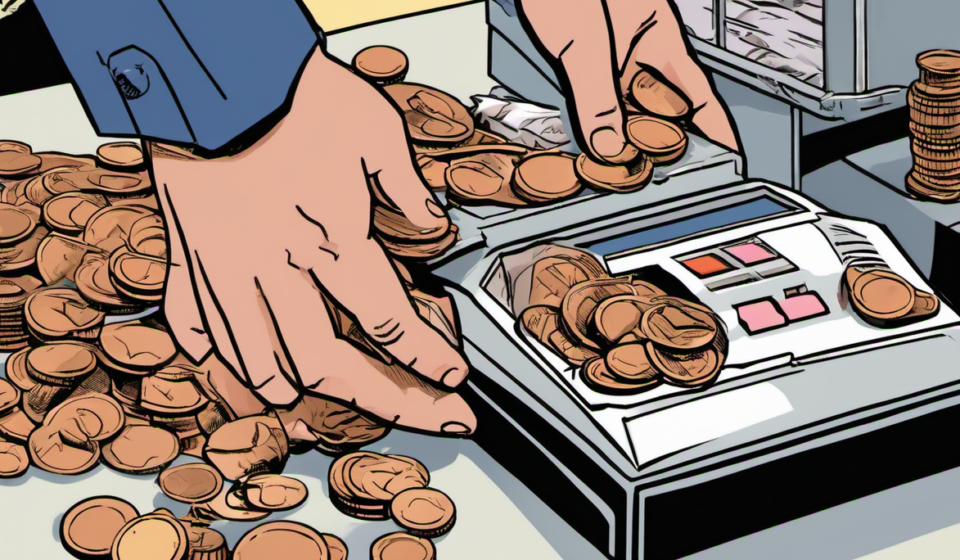
House Votes to End Penny Minting, Adopt Cash Rounding
House Votes to End Penny Minting, Adopt Cash Rounding
The U.S. House of Representatives has taken a decisive step toward modernizing everyday transactions by voting unanimously to eliminate the one‑cent coin. The newly passed Common Cents Act will officially end penny minting and establish cash rounding to the nearest nickel for all cash transactions. This move reflects a growing consensus that the penny is a relic of a bygone era, costing more to produce than it is worth in circulation.
Why the Penny Is Becoming Obsolete
For decades, lawmakers and economists have debated the penny’s relevance. Production costs for the coin have consistently exceeded its face value, and many consumers find it cumbersome to handle. In 2023, the U.S. Mint reported that it costs about 1.5 cents to produce a single penny, while the coin’s value remains just one cent. The cumulative cost of minting and distributing billions of pennies each year adds up to a significant expense for the Treasury.
The Common Cents Act Explained
The Common Cents Act, now a law, removes the penny from U.S. coinage. It also introduces a cash‑rounding rule: when a transaction is paid in cash, the total will be rounded to the nearest nickel. For example, a purchase of $10.02 would be rounded to $10.00, while $10.03 would become $10.05. This rounding applies only to cash payments; electronic transactions will still be calculated to the exact cent.
Implications for Consumers and Businesses
Consumers may notice a slight shift in the way cash transactions are settled. While the rounding rule could result in a few cents’ difference on individual purchases, the overall impact on household budgets is expected to be minimal. Businesses will need to update point‑of‑sale systems to accommodate the new rounding policy, but most modern cash registers already have this capability built in.
Political Context and Support
The bill’s unanimous passage in the House signals broad bipartisan support for the measure. Representatives cited the penny’s high production cost, the inconvenience it poses to consumers, and the opportunity to streamline cash transactions as key reasons for the vote. The Senate is now reviewing the legislation, and if it passes, the penny will be officially retired by the end of 2025.
Looking Ahead
While the elimination of the penny may seem like a small change, it represents a broader trend toward simplifying monetary transactions. The U.S. is not alone; several other countries have already phased out low‑denomination coins. As the Common Cents Act moves through the legislative process, the public will watch closely to see how this change affects everyday commerce.
Source: Fox News
Watch and listen free on JASTORM – Follow radio and video broadcasts free in the JASTORM app with your free account.